Brand Safety Isn't About Controlling Every Word
After 1,500+ influencer marketing campaigns, true brand safety comes down to 7 strategic principles, not micromanaging creators. Learn how to protect your brand while preserving authentic creator voice.
2 min read
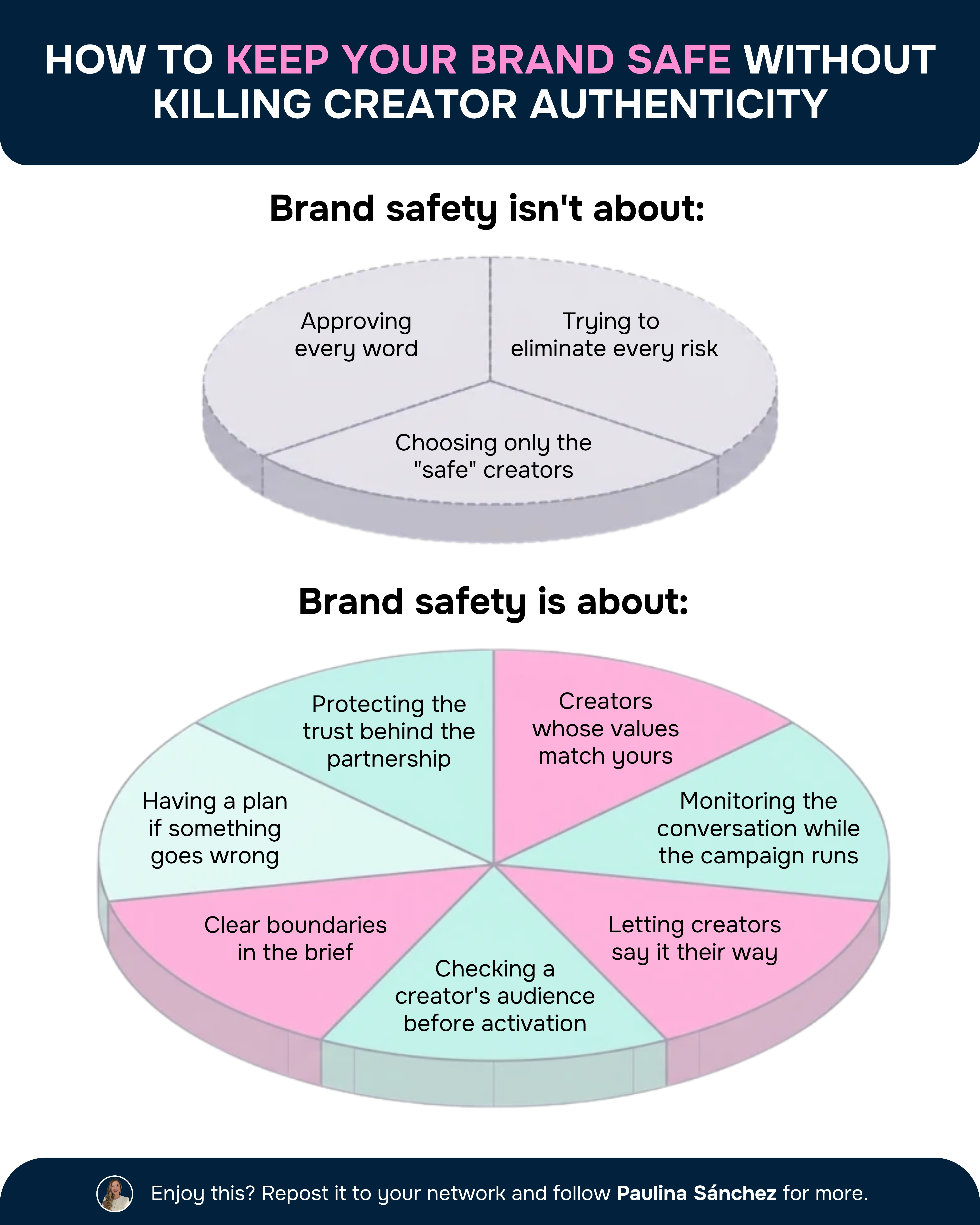
After 1,500+ Influencer Marketing campaigns, one thing is clear: Brand safety isn't about controlling every word.
When brands worry about what a creator might say, the instinct is to control everything. So the team ends up:
- Approving every word.
- Trying to eliminate every risk.
- Choosing only the "safe" creators.
But the more a brand controls the content, the less it sounds like the creator. And their audience notices.
Brand safety starts long before the content goes live. And it comes down to 7 things:
1. Clear boundaries in the brief
→ What must be said, what can't be said, and what the creator gets to decide.
When everyone knows the limits before filming, there's less to fix later. Creators have room to be creative without crossing the brand's limits.
2. Creators whose values match yours
→ Their past content shows what they stand for and how they talk to their audience.
Shared values reduce the risk of a creator saying something that conflicts with what the brand stands for. It's easier to choose the right creator from the start than to fix a bad match later.
3. Letting creators say it their way
→ The brand sets the message. The creator decides how to deliver it.
Creators know how to connect with their own audiences. That's why people watch and trust them. A word-for-word script takes away what makes the creator valuable: their own voice.
4. Checking a creator's audience before activation
→ The brand needs to know who the content will reach.
The same message can land very differently depending on who's watching. Checking the audience before choosing a creator helps the brand see whether the partnership is a good fit.
5. Monitoring the conversation while the campaign runs
→ Comments and audience reactions show how people are receiving the message.
Brand safety doesn't end when the first post goes live. Spotting a concern early gives the team more time to respond.
6. Having a plan if something goes wrong
→ Who responds, who makes the decisions, and what happens next.
The team agrees on the plan before the campaign starts. That way, everyone knows their role when something needs attention.
7. Protecting the trust behind the partnership
→ A brand borrows the trust a creator has earned with their audience. That trust makes the recommendation valuable.
Protecting it starts with creator selection and continues through content approval. The brand is entering a relationship the creator already has with their audience.
Brand safety means taking care of that relationship throughout the campaign.
Enjoy this?
Follow me on LinkedIn