Mastering Influencer Marketing in 2026: The Complete Strategy Guide
Technology has transformed influencer marketing—brands can now activate thousands of creators at once. Learn the new framework for campaign impact, measurement, and strategy that ambitious brand managers can no longer ignore.
3 min read

Influencer marketing has never been "easy." But it was simpler before…
Until 1 shift changed everything:
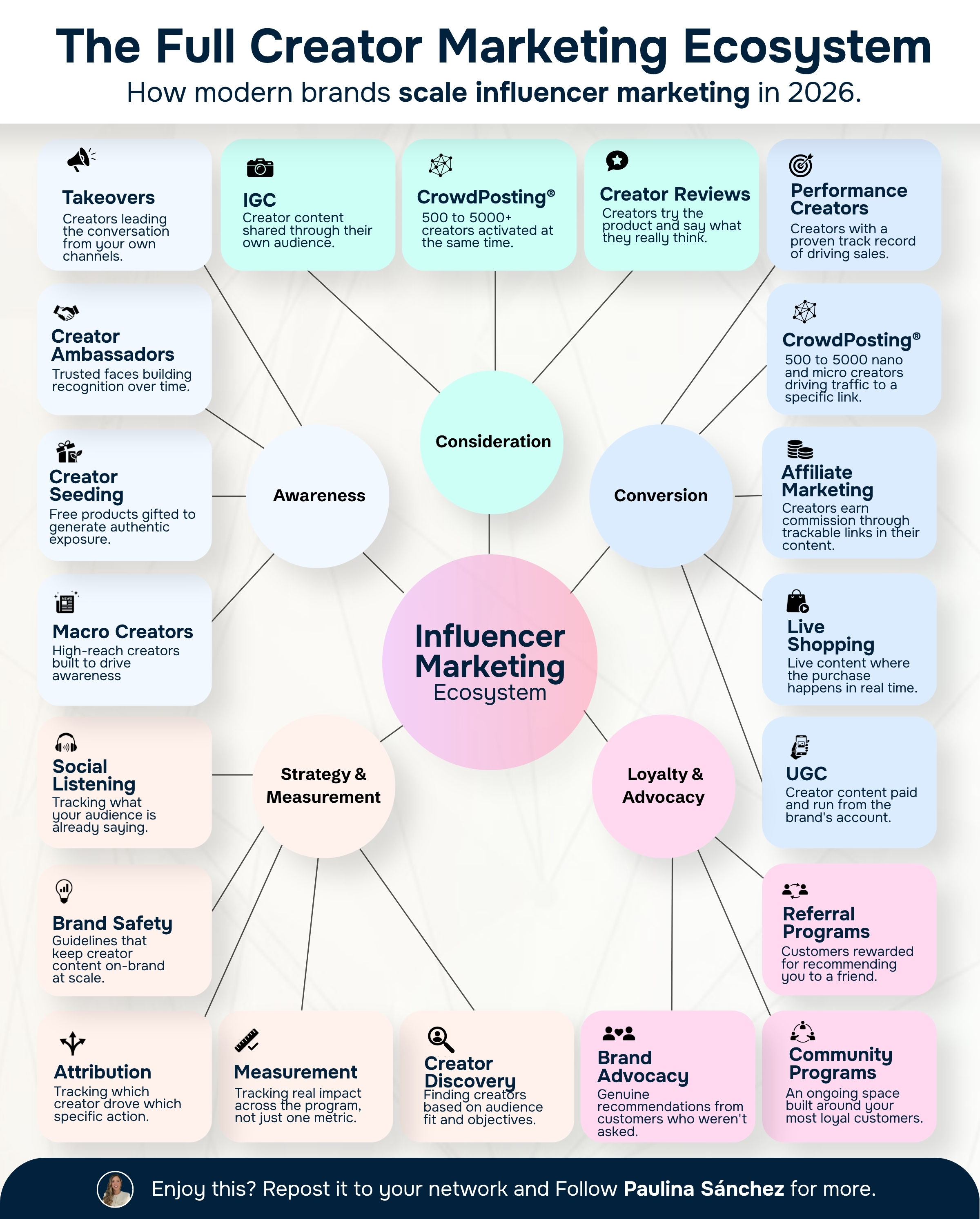
Technology now lets brands activate 5,000 creators at once.
It's not about the big celebrity anymore; it's about the nanos' and micros' compounding effect.
Budgets are bigger. Creators are everywhere. But most brands are still running one macro activation and wondering why nothing compounds.
And that's why I have opened my calendar to give exclusive 1o1 advisory on how to win with Influencer marketing:
Because with these new trends comes a whole new approach to how you run creator programs. One that ambitious brand managers can no longer afford to ignore.
Here's everything you need to master influencer marketing in 2026:
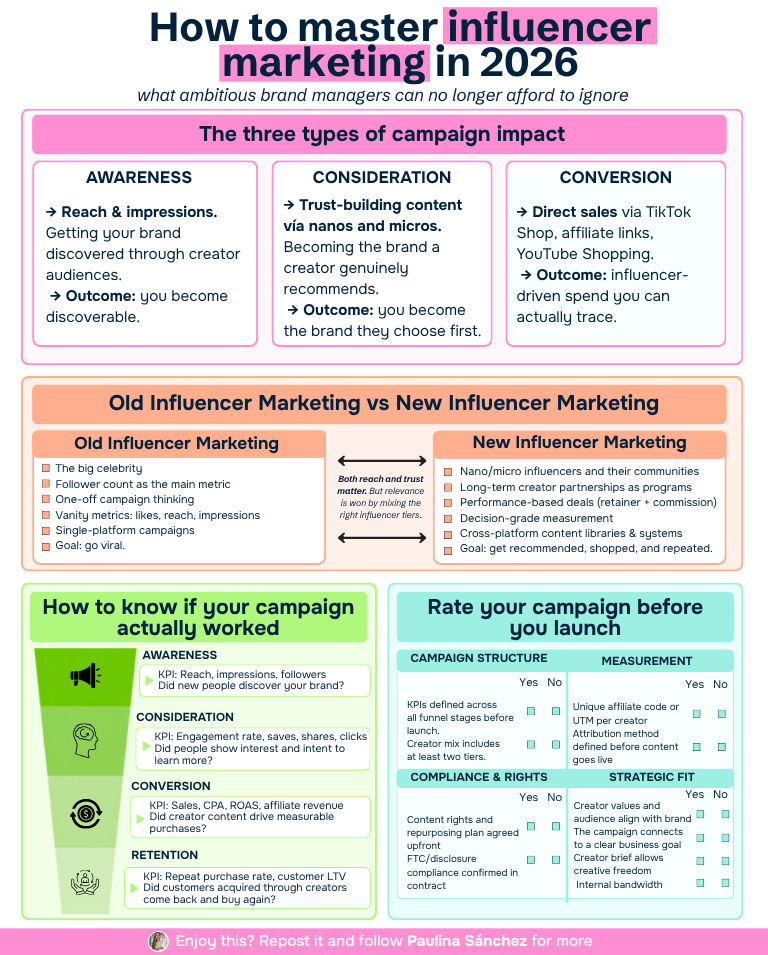
(See the visual for the full breakdown!)
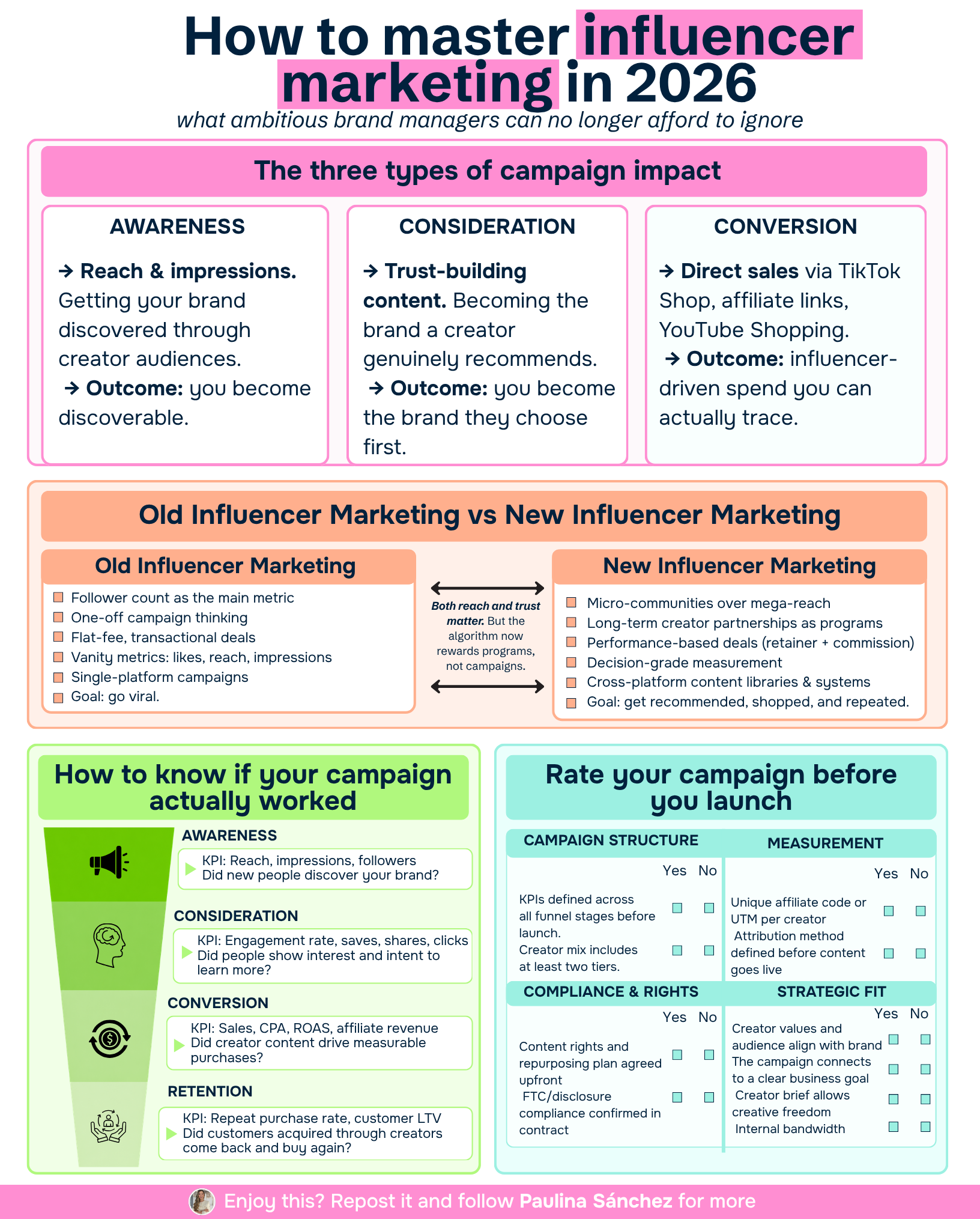
1. The 3 Types of Campaign Impact
Awareness
↳ Reach & impressions. Getting your brand discovered through creator audiences. ↳ Outcome: you become discoverable.
Consideration
↳ Trust-building content via nano and micro influencers. Becoming the brand a creator genuinely recommends. ↳ Outcome: you become the brand they choose first.
Conversion
↳ Direct sales via TikTok Shop, affiliate links, YouTube Shopping. ↳ Outcome: influencer-driven spend you can actually trace.
2. Old Influencer Marketing vs. New
Old focused on:
↳ The big celebrity ↳ Follower count as the main metric ↳ One-off campaign thinking ↳ Flat-fee, transactional deals ↳ Vanity metrics: likes, reach, impressions ↳ Single-platform campaigns ↳ Goal: go viral.
New focuses on:
↳ Nano and micro influencers and their communities over the big celebrity and mega reach ↳ Long-term creator partnerships as programs ↳ Performance-based deals (retainer + commission) ↳ Decision-grade measurement: CPA, ROAS, attribution ↳ Cross-platform content libraries & distribution systems ↳ Goal: get recommended, shopped, and repeated.
Both reach and trust matter. But relevance is won by mixing the right influencer tiers.
3. How to know if your campaign actually worked
There are 4 levels to this:
Level 1: Awareness
↳ KPI: Reach, impressions, followers ↳ Did new people discover your brand?
Level 2: Consideration
↳ KPI: Engagement rate, saves, shares, website clicks ↳ Did people show interest and intent to learn more?
Level 3: Conversion
↳ KPI: Sales, CPA, ROAS, affiliate revenue ↳ Did creator content drive measurable purchases?
Level 4: Retention
↳ KPI: Repeat purchase rate, customer LTV, subscription renewals ↳ Did customers acquired through creators come back and buy again?
4. Rate Your Campaign Before You Launch
Score yourself against these 10 markers:
Campaign Structure
↳ KPIs defined across all funnel stages before launch ↳ Creator mix includes at least two tiers (nano/micro/macro)
Measurement
↳ Unique affiliate code or UTM per creator ↳ Attribution method defined before content goes live
Compliance & Rights
↳ Content rights and repurposing plan agreed upfront ↳ FTC/disclosure compliance confirmed in contract
Strategic Fit
↳ Creator values and audience genuinely align with brand ↳ The campaign connects to a clear business goal ↳ Internal bandwidth to manage relationships, not just approve posts
Your score:
8–10 = Campaign-ready
5–7 = Needs structure before you spend
0–4 = Not ready to launch
Enjoy this?
Follow me on LinkedIn