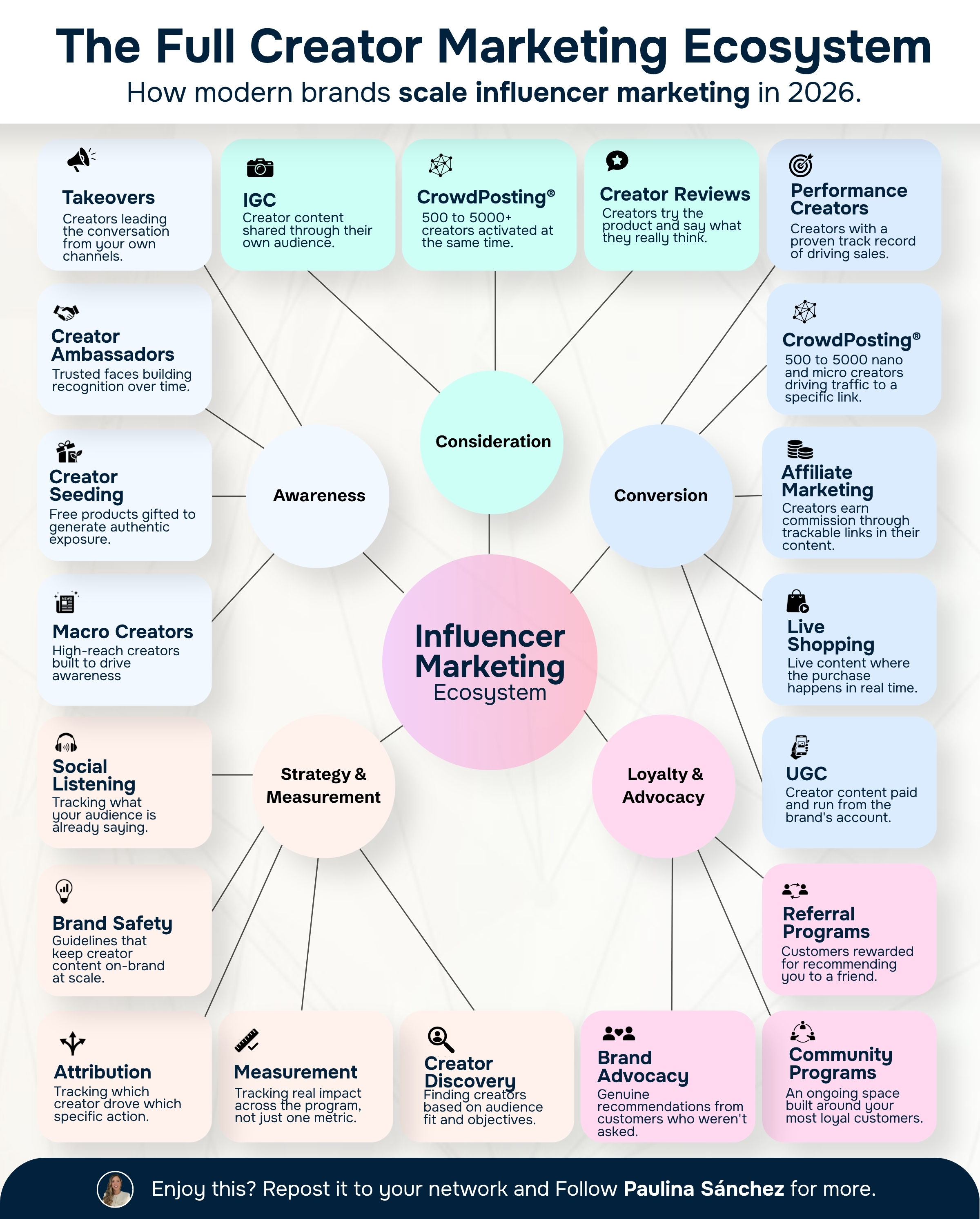
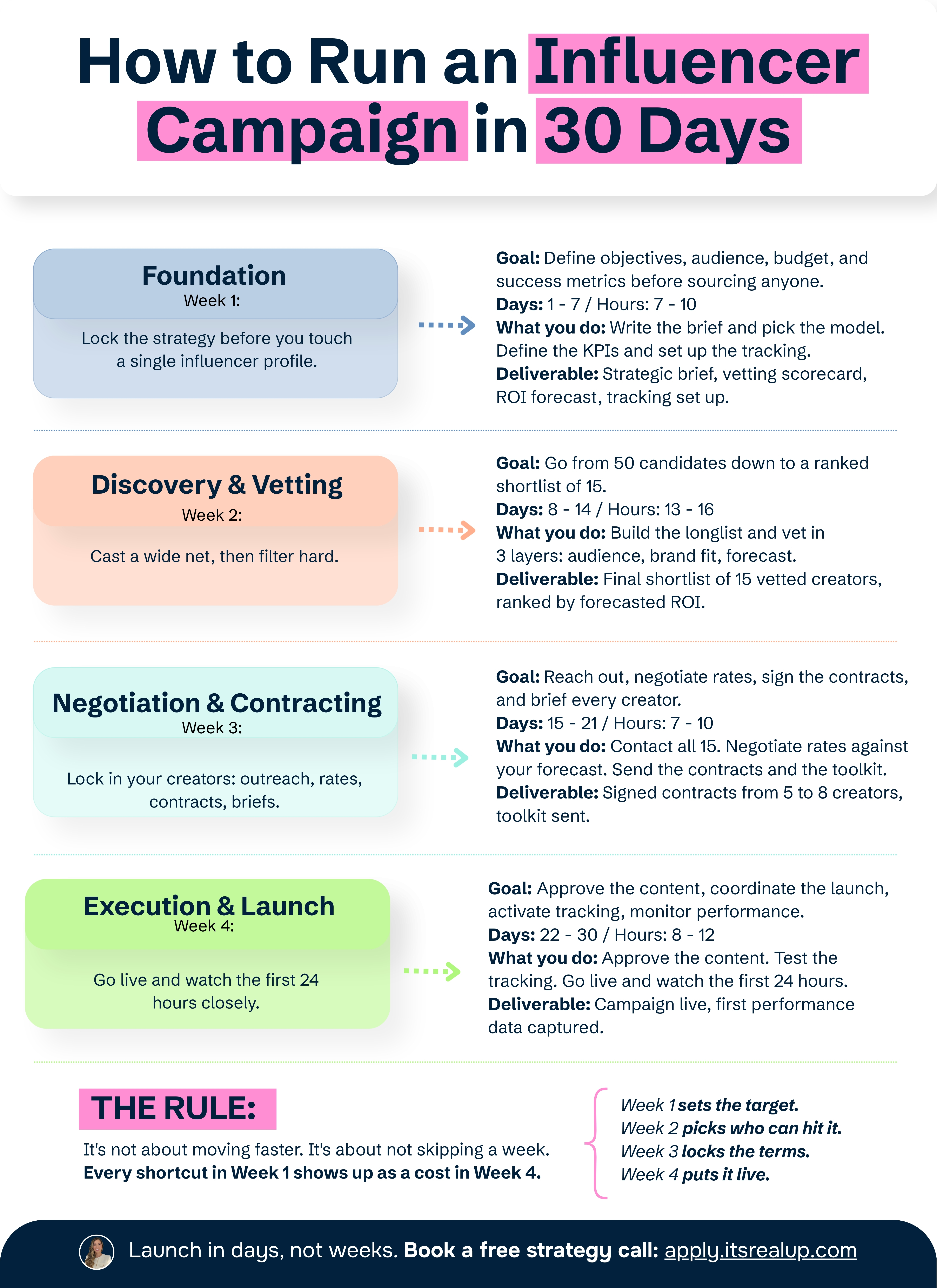
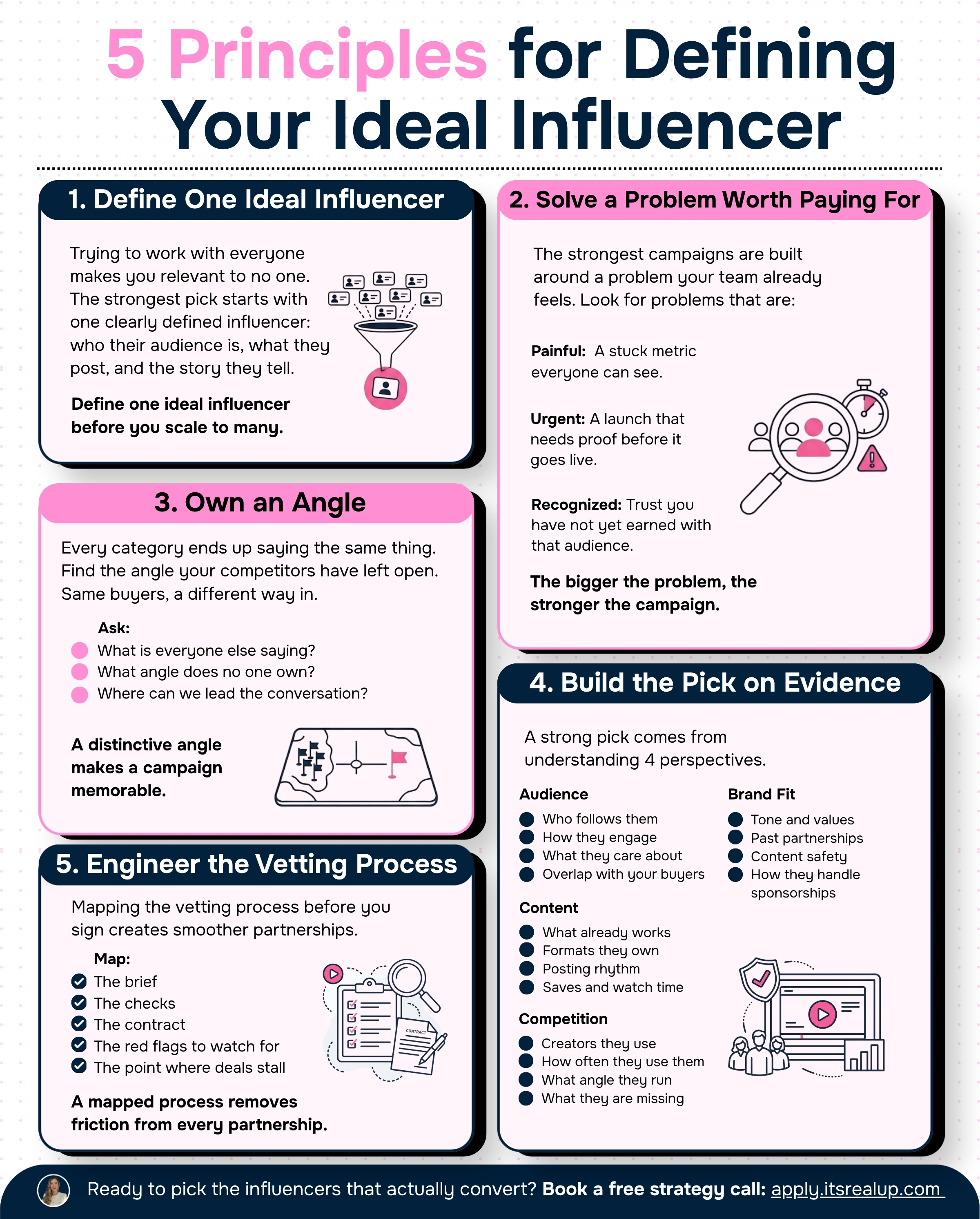
Scaling Influencer Marketing Means Building Better Systems, Not Adding More Resources
Scaling influencer marketing isn't about hiring more people. It's about building systems that handle repetitive tasks so teams can focus on strategy, creativity, and judgment. Discover how the best influencer programs scale without adding complexity.
1 min read


Common misconception: Scaling influencer marketing means adding more resources.
It doesn't.
It means building better systems.
Before influencer marketing became a channel, a budget line, or a growth strategy, it was something much simpler.
One person discovered something valuable.
They shared it with someone they trusted.
And that recommendation moved people.
That's what brands are trying to replicate thousands of times: trusted recommendations at scale.
But that's where it gets complicated. One recommendation can involve dozens of steps.
Finding creators.
Checking audiences.
Validating brand fit.
Negotiating.
Briefing.
Approvals.
Legal.
Publishing.
Measuring.
Now multiply that by hundreds or even thousands of creators.
That's where scaling breaks down.
The challenge isn't generating more trusted recommendations.
It's managing everything around them without adding more complexity.
Without a system, every new creator adds more coordination, more manual work, and more complexity.
A good system takes care of what can be repeated: creator discovery, campaign management, approvals, payments, and reporting.
Teams stay focused on what can't be automated: strategy, creativity, and judgment.
The best influencer programs don't scale by adding more people.
They scale by building better systems.
If your influencer program grew 10x tomorrow, would your process handle it?
Enjoy this?
Follow me on LinkedIn