5 Types of Influencer Marketing Campaigns: Choose the Right Strategy for Your Goal
"Let's do an influencer campaign" can mean 5 very different strategies. Learn how to match your goal, timeline, and budget to the right creator mix. from viral launches to year-round ambassador programs.
3 min read
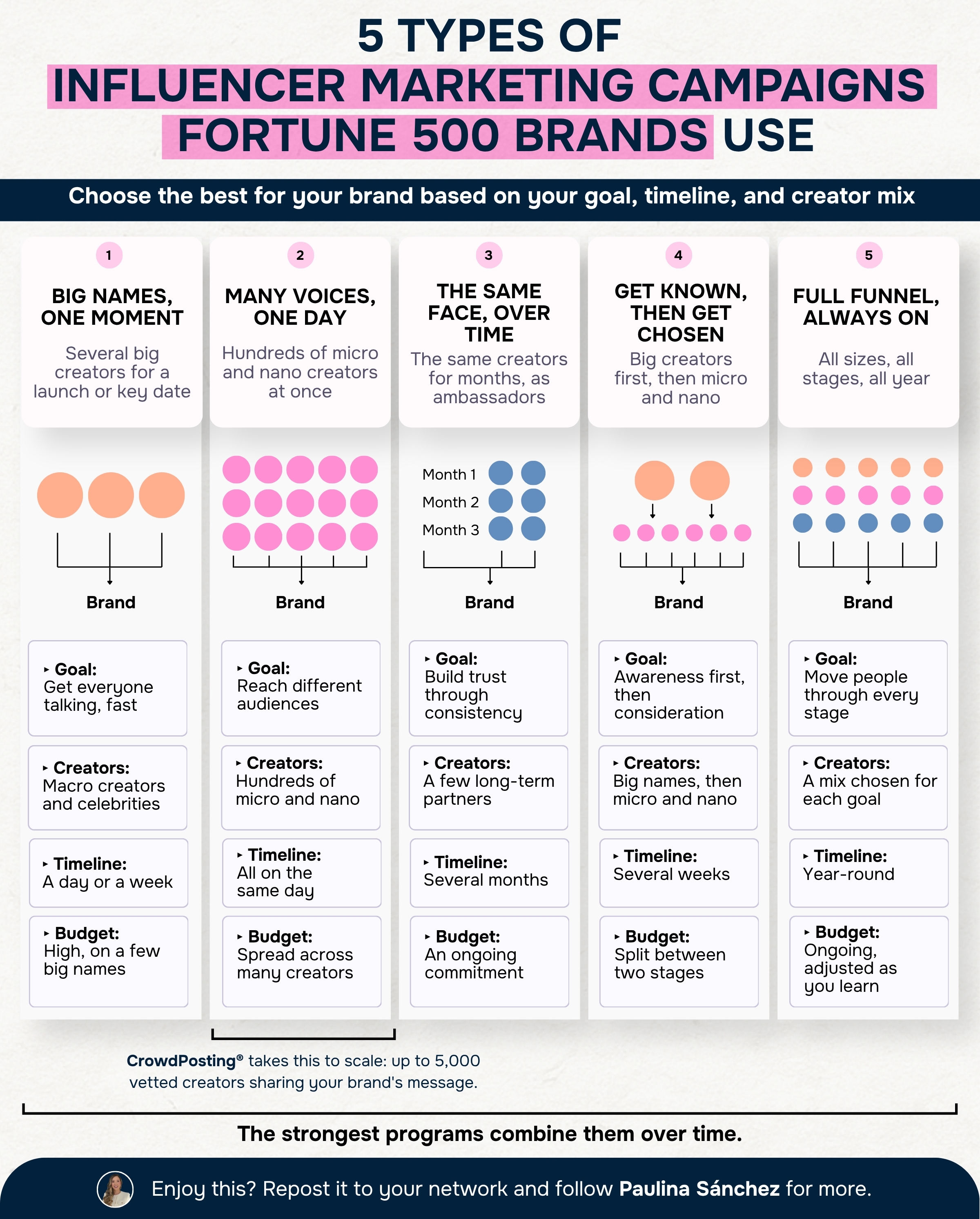
"Let's do an influencer campaign." That one sentence can mean 5 very different strategies.
A launch needs attention fast. An ambassador program builds familiarity over months. An always-on program keeps your brand top of mind throughout the year. Each needs different creators, a different timeline, and a different budget.
So, before choosing who to work with, decide what you need them to do.
Here are 5 types of influencer marketing campaigns, based on your goal, timeline, and creator mix:
1/ Big names, one moment
Work with several big creators and celebrities for a launch or a key date. The goal is to go viral: for a few days, it feels like everyone is talking about your brand.
→ Creators: a group of macro creators and celebrities, chosen for your audience
→ Timeline: a day or a week
→ Budget: high, concentrated on a few big names
2/ Many voices, one day
Hundreds of micro and nano creators post about your brand on the same day. Each one talks about it in their own way, so your brand reaches different audiences through creators they already follow.
→ Creators: hundreds of micro and nano creators
→ Timeline: one coordinated day
→ Budget: spread across many creators
CrowdPosting® (activating micro and nano creators at volume) takes this approach to scale: up to 5,000 vetted creators sharing your brand's message.
3/ The same face, over time
Work with the same creators for months as brand ambassadors. Their audience sees your brand again and again. That consistency is what builds trust.
→ Creators: a few long-term partners
→ Timeline: several months
→ Budget: an ongoing commitment
4/ Get known, then get chosen
Big creators introduce your brand to a wide audience, fast. Then micro and nano creators show it in everyday situations to specific audiences. People feel closer to them, so they're more likely to try it.
→ Creators: a few big names, followed by micro and nano creators
→ Timeline: several weeks
→ Budget: split between the two stages
5/ Full funnel, always on
Work with creators throughout the year to help people discover, consider, and buy your brand.
Each campaign has a role. Some introduce the product. Others explain it, show it in use, or support a specific offer. Results from each campaign help you improve the next.
→ Creators: a mix chosen for each goal
→ Timeline: year-round
→ Budget: ongoing, adjusted as you learn
Each strategy serves a different goal, and each has its own way to measure success.
The strongest programs combine them over time: big creators to introduce the brand, hundreds of smaller creators to spread the message, and ambassadors to keep it present throughout the year.
So the next time someone says, "Let's do something with influencers," the first question is: which one?
Enjoy this?
Follow me on LinkedIn