9 Things That Changed How I Think About Influencer Marketing
After +1,500 campaigns, discover the 9 key lessons about influencer marketing that most brands overlook, from the importance of human judgment to strategic measurement.
2 min read

Many seem obvious.
But they're the ones I've seen brands overlook the most.
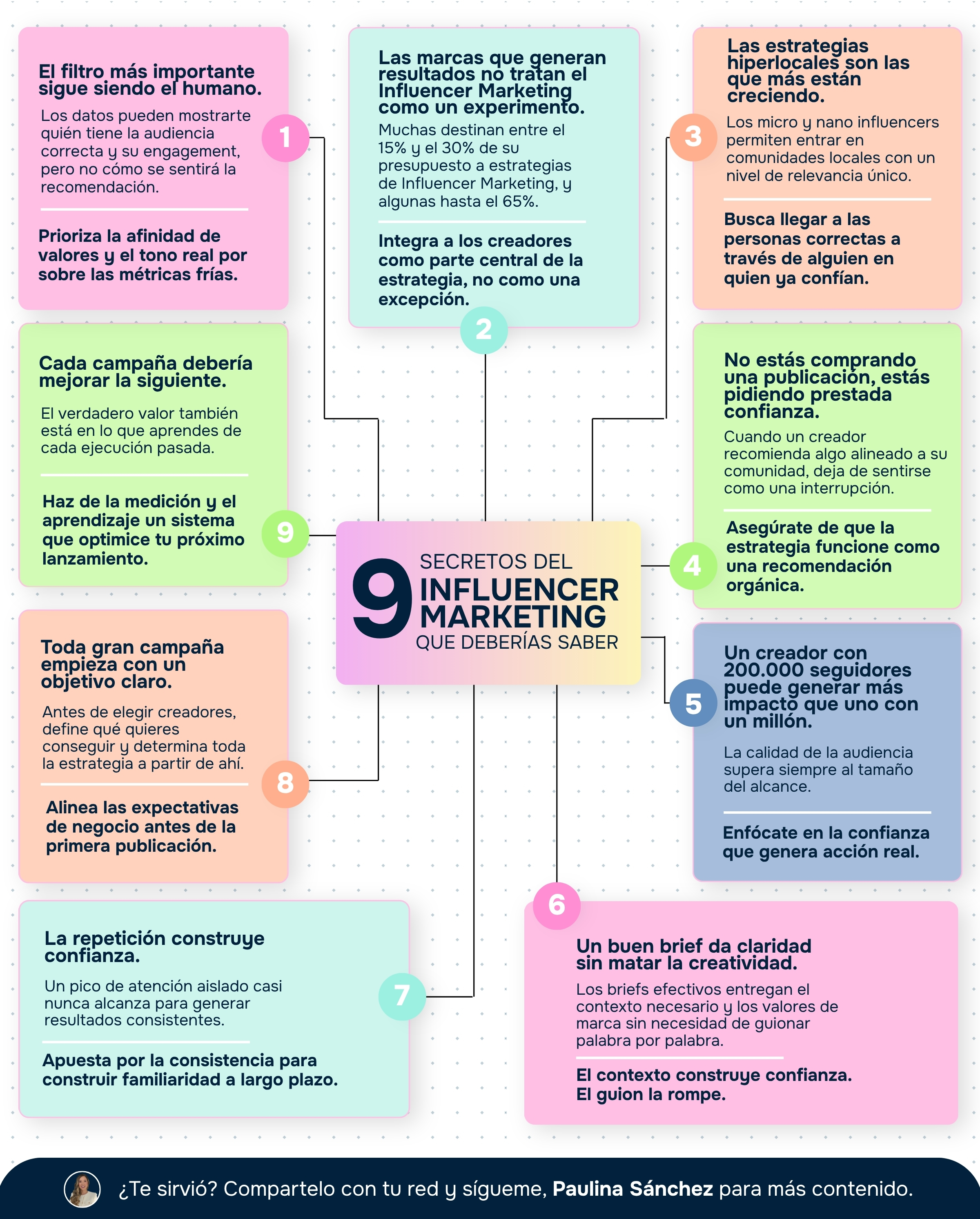
1. The most important filter is still human.
Data can show you who has the right audience and how consistent their engagement is. But not how a recommendation will feel when it comes from them.
The real fit between brand and influencer is in their values, their tone, and their way of communicating.
And that requires human judgment.
2. Brands that generate results don't treat Influencer Marketing as an experiment.
Many already allocate 15–30% of their marketing budget to creators. Some reach up to 65%.
The game changer: making creators part of the strategy, not treating them as an exception.
3. Hyperlocal strategies are the ones growing the most.
Micro and nano influencers allow you to enter local communities that a mass campaign can hardly reach with the same level of relevance.
It's about reaching the right people, in the right place, through someone they trust.
4. You're not buying a post. You're borrowing a creator's trust.
The fit with the audience, the influencer's credibility, and a clear objective make a campaign feel relevant.
When a creator recommends something that fits their content and their community, the brand stops feeling like an interruption.
And it starts to feel like a recommendation.
5. A creator with 200,000 followers can generate more impact than one with a million.
Audience quality beats size.
Trust that generates action is worth more than reach that generates nothing.
6. A good brief provides clarity without killing creativity.
Many brands think the brief is only for reducing risk.
But a brief that generates results delivers context: what can and can't be done or said, what's expected from the campaign, and what the brand's pillars and values are.
Without needing to script word for word.
The more you control the form, the more you lose the authenticity that builds trust.
7. Repetition builds trust. A single collaboration almost never cuts it.
A spike in attention doesn't build trust. Staying present does.
Consistency builds familiarity for when the audience is ready to buy.
8. Every great campaign starts with a clear objective and realistic expectations.
Before choosing creators, define what you want to achieve.
The expected result determines the strategy.
9. Every campaign should improve the next one.
The true value of a campaign is also in what you learn: what worked, what didn't, and what to do differently.
Measurement is part of the strategy.
The success of a campaign doesn't depend on a single decision.
But on an aligned and defined strategy before the first post.
If you found this post useful
Follow me on LinkedIn